
🎯 Executive Summary: Complete macOS Settings Guide (2026)
The TechZero macOS Settings Guide is a comprehensive, evidence-based resource designed to help users master every major system setting on Apple Silicon and Intel Macs. Built like a professional hardware buying guide, it cuts through default configurations to deliver actionable recommendations, performance impacts, and Windows equivalents.
🔍 Core Focus Areas Covered
- Speed Up Your Mac: Learn how to reclaim system RAM and accelerate boot times by pruning unnecessary startup daemons (
Login Items) and optimizing background file indexing (Spotlight). - Improve Battery Life: Maximize mobile runtime and protect long-term battery health using energy-saving toggles like
Low Power ModeandOptimized Battery Charging. - Secure Your Mac: Enforce baseline system security by activating hardware-accelerated
FileVaultfull-disk encryption and configuring the built-in applicationFirewallfor public networks. - Customize macOS: Enhance day-to-day navigation ergonomics by enabling features like
Tap-to-Clickfor smoother trackpad workflows. - Advanced Settings: Optimize internet lookup speeds and privacy by configuring trusted public DNS resolvers such as Cloudflare (
1.1.1.1).
💡 Key Editorial Takeaways
- Target Audience: Tailored for new Mac owners, Windows switchers, students, professionals, and developers looking for peak system efficiency.
- Structured Format: Features clear editorial verdicts, risk levels, common user mistakes, expert deep-dives, and quick-action checklists for every setting.
Complete macOS Settings Guide (2026): Every Setting Explained
Navigating macOS System Settings shouldn’t feel like guessing codes in a dark room. Every single toggle, menu, and slider inside macOS exists for a specific operational purpose—whether it is managing low-level kernel security, regulating energy draw on Apple silicon, or adjusting spatial audio parameters. For official reference documentation, consult the Apple macOS User Guide.
Designed like a definitive guide for your operating system, this guide separates Apple’s default behavior from TechZero’s evidence-based recommendations, providing performance impacts, Windows equivalents, and clear editorial verdicts. If you are transitioning platforms for the first time, check out our guide on Switching from Windows to Mac.
👤 Who is this guide for?
- ✓ New Mac users
- ✓ Windows switchers
- ✓ Students
- ✓ Professionals
- ✓ Developers
- ✓ Anyone who wants to optimize macOS
Quick Summary: What To Do…
| If you want to… | Go to section |
|---|---|
| Speed up my Mac | Speed Up Your Mac |
| Improve battery | Improve Battery Life |
| Secure my Mac | Secure Your Mac |
| Customize macOS | Customize macOS |
| Advanced networking | Advanced Settings |
📋 Settings Covered in This Guide
This guide explains:
- ✓ Login Items
- ✓ Spotlight
- ✓ Low Power Mode
- ✓ Optimized Charging
- ✓ FileVault
- ✓ Firewall
- ✓ Tap to Click
- ✓ DNS
…and 80+ other macOS settings.
Speed Up Your Mac
Best for reclaiming system memory, eliminating background helper bloat, and accelerating startup boot times.
Controls which third-party applications, helper daemons, and cloud updaters automatically launch into your system RAM the moment your Mac boots up or run silently in the background. For deeper startup management insights, refer to our Mac Buying Guide and Apple Silicon Explained.
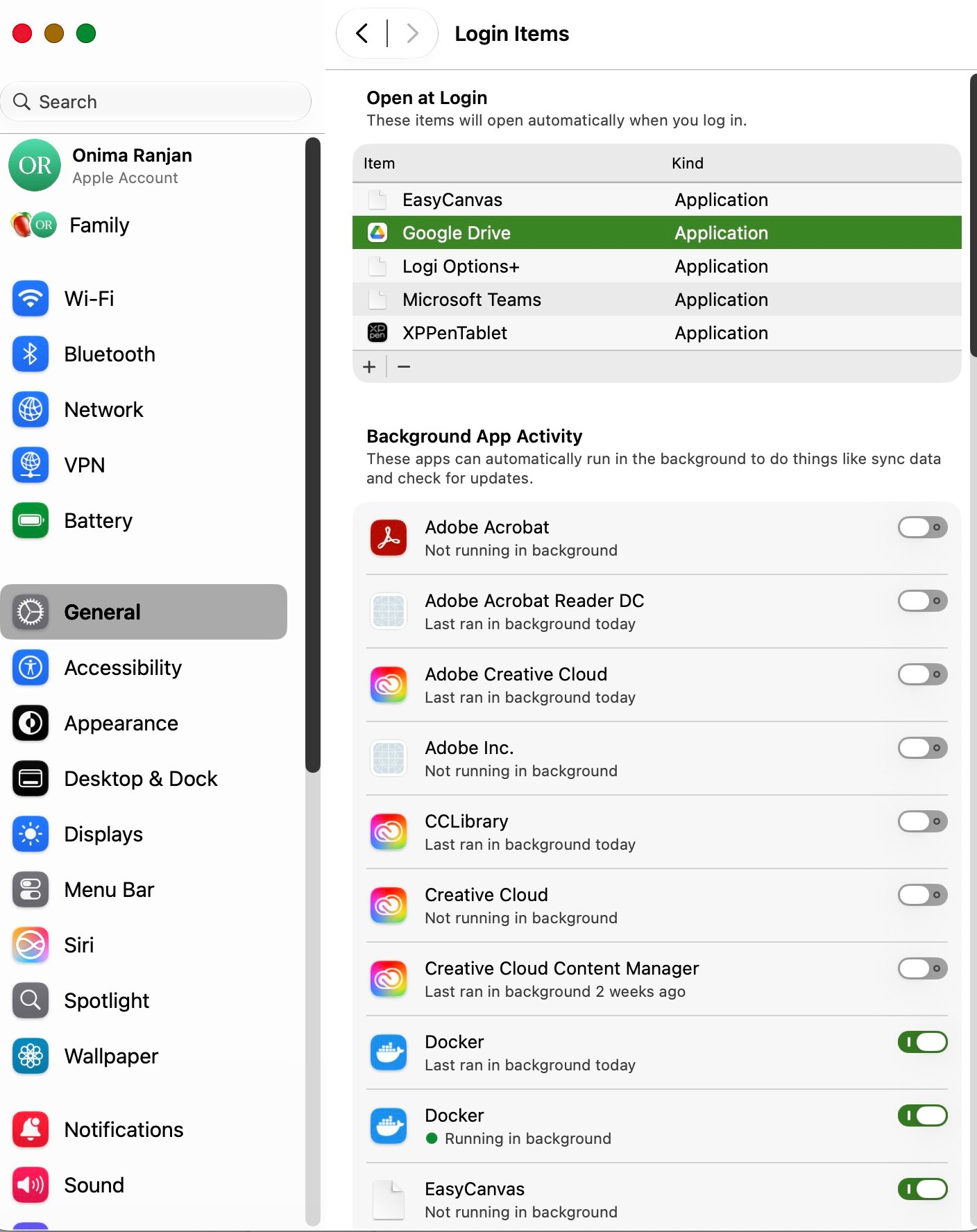
Visual Workflow: Review both sections to toggle off persistent third-party updaters.
*Typical improvement (depends on installed apps and Mac model).
Apple’s Default
Every installed utility app automatically registers background helper daemons and startup hooks during installation.
TechZero Recommendation
Remove apps you don’t need at startup, keeping only essential password managers or chat updaters.
💡 Expert Deep-Dive: Common Mistakes, Myths & Smart Tips
⚠️ Common Mistakes
- Disabling essential cloud storage synchronization daemons (like OneDrive or Dropbox) while expecting automatic file backups.
- Accidentally removing password manager helper hooks, breaking browser autofill functionality.
Best for decluttering search results and preventing continuous disk indexing on massive external scratch disks.
Spotlight builds a background database of all files on your Mac so you can hit Command + Space and find documents instantly. Restricting categories cuts down background CPU usage. For more search configurations, review our dedicated Spotlight Search Guide and Finder Explained for Windows Users.
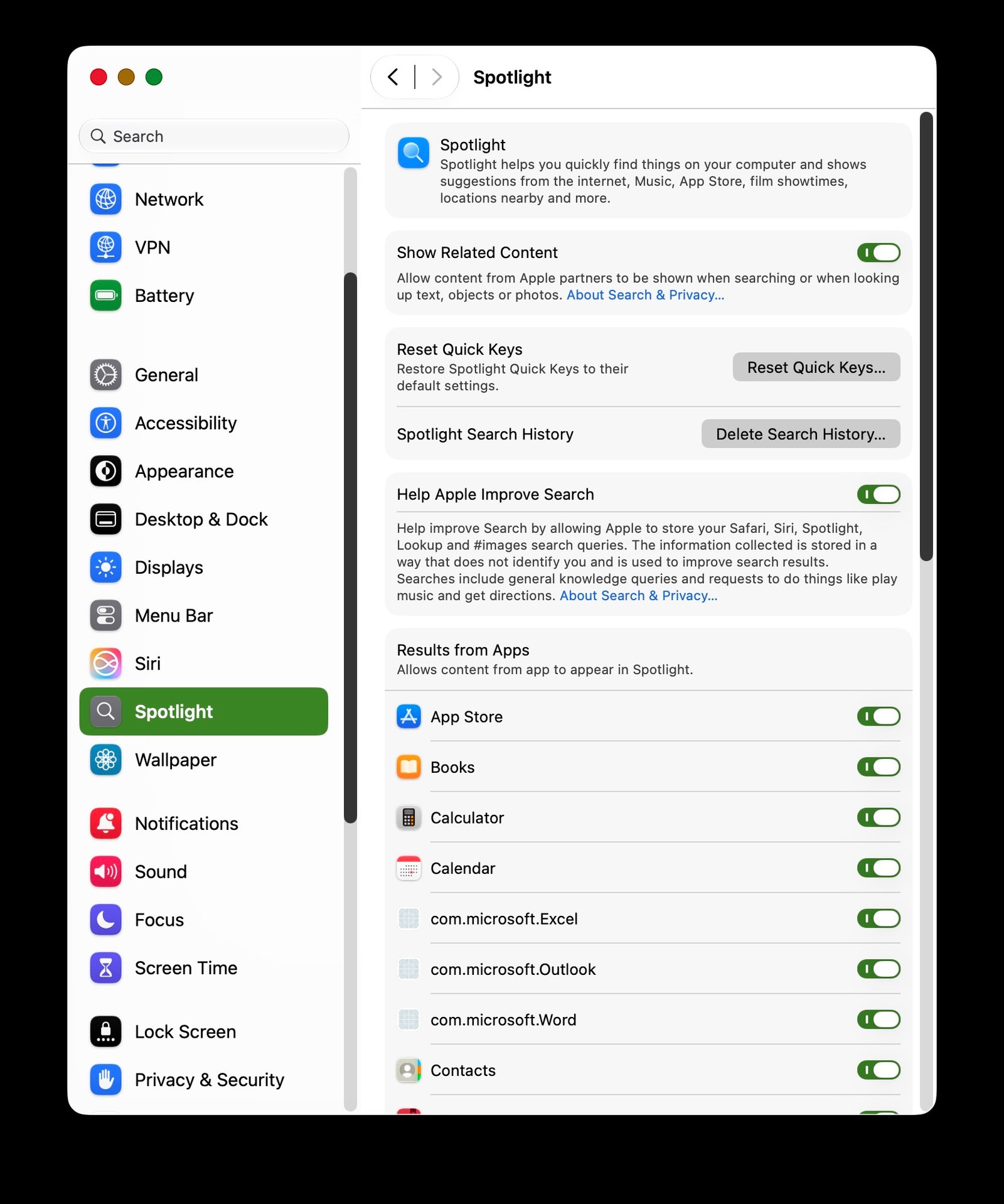
Visual Workflow: Uncheck redundant data types to speed up search popups.
Apple’s Default
Indexes every single file category across your entire hard drive automatically.
TechZero Recommendation
Disable indexing for heavy code directories or archives you never search via Spotlight.
💡 Expert Deep-Dive: Common Mistakes, Myths & Smart Tips
⚠️ Common Mistakes
- Completely turning off indexing globally instead of utilizing privacy folder exclusions for massive scratch drives.
✓ Performance & Speed Checklist
- ✓ Remove unused Login Items
- ✓ Keep at least 15% free storage space
- ✓ Exclude heavy developer or archive folders from Spotlight indexing
- ✓ Reduce heavy desktop widgets if running older hardware configurations
Improve Battery Life
Best for maximizing laptop battery life during travel, fieldwork, or when working away from a wall charger.
Low Power Mode dials back CPU clock speed spikes, slightly reduces screen brightness, and pauses background mail syncs and cloud uploads to reduce power consumption when you are away from an electrical outlet. Combine this with our Battery Health Guide for optimal mobile lifespan.
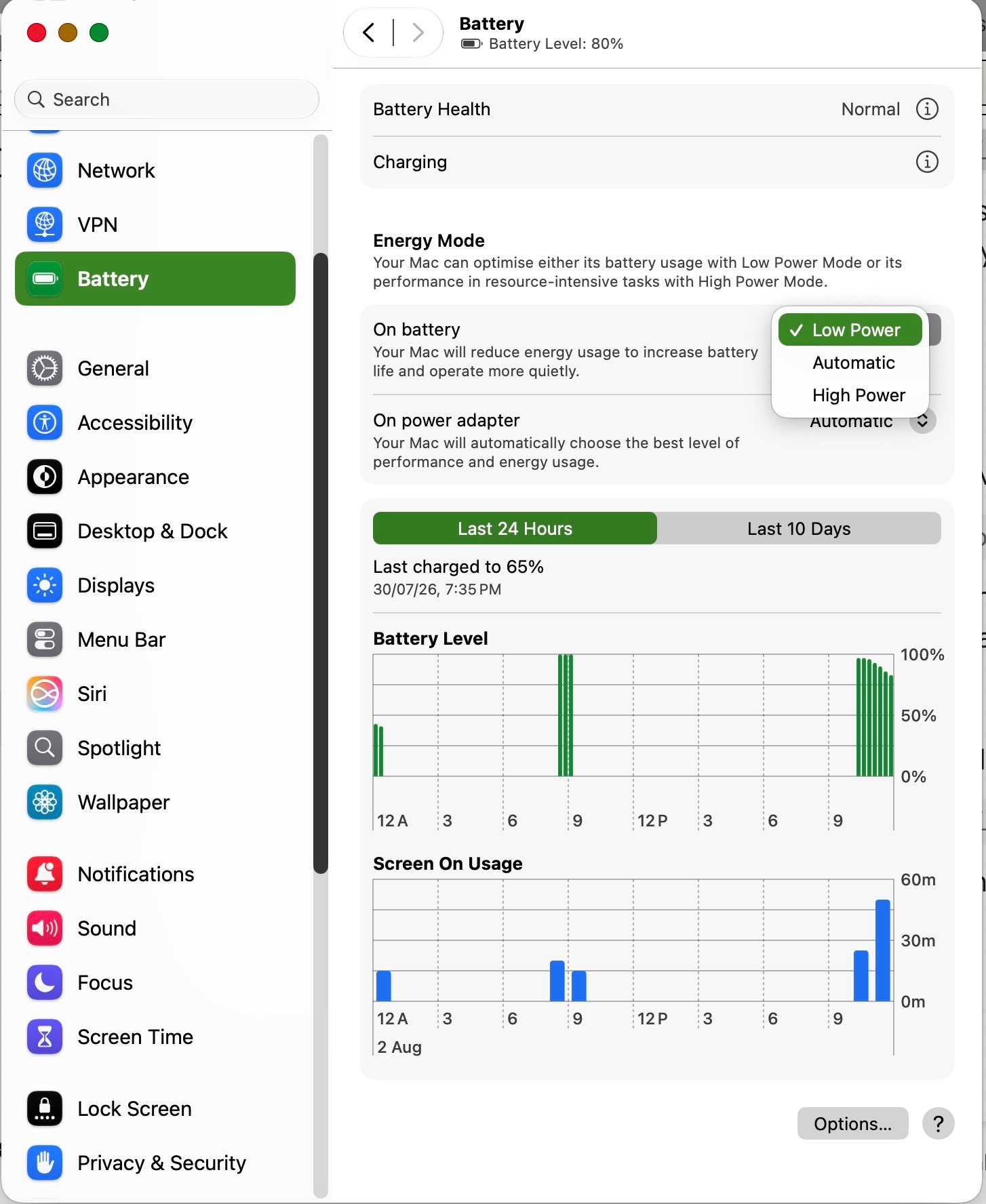
Visual Workflow: Click dropdown menu to switch behavior from default to Always.
*Typical improvement (depends on active apps and workload).
Apple’s Default
Configured to trigger “Only on Battery” or remain entirely disabled depending on initial power setup profiles.
TechZero Recommendation
Set to “Always” when traveling or working remotely without AC access to optimize thermal efficiency.
💡 Expert Deep-Dive: Common Mistakes, Myths & Smart Tips
⚠️ Common Mistakes
- Leaving Low Power Mode active permanently even when docked to high-power studio displays and AC chargers, needlessly throttling workstation CPU performance.
Best for users who keep their MacBook plugged into a desktop dock for days at a time.
Your Mac uses machine learning to study your charging habits. If you leave it plugged in overnight or at a desk, it holds the charge at 80% and finishes topping it off to 100% right before you typically unplug.
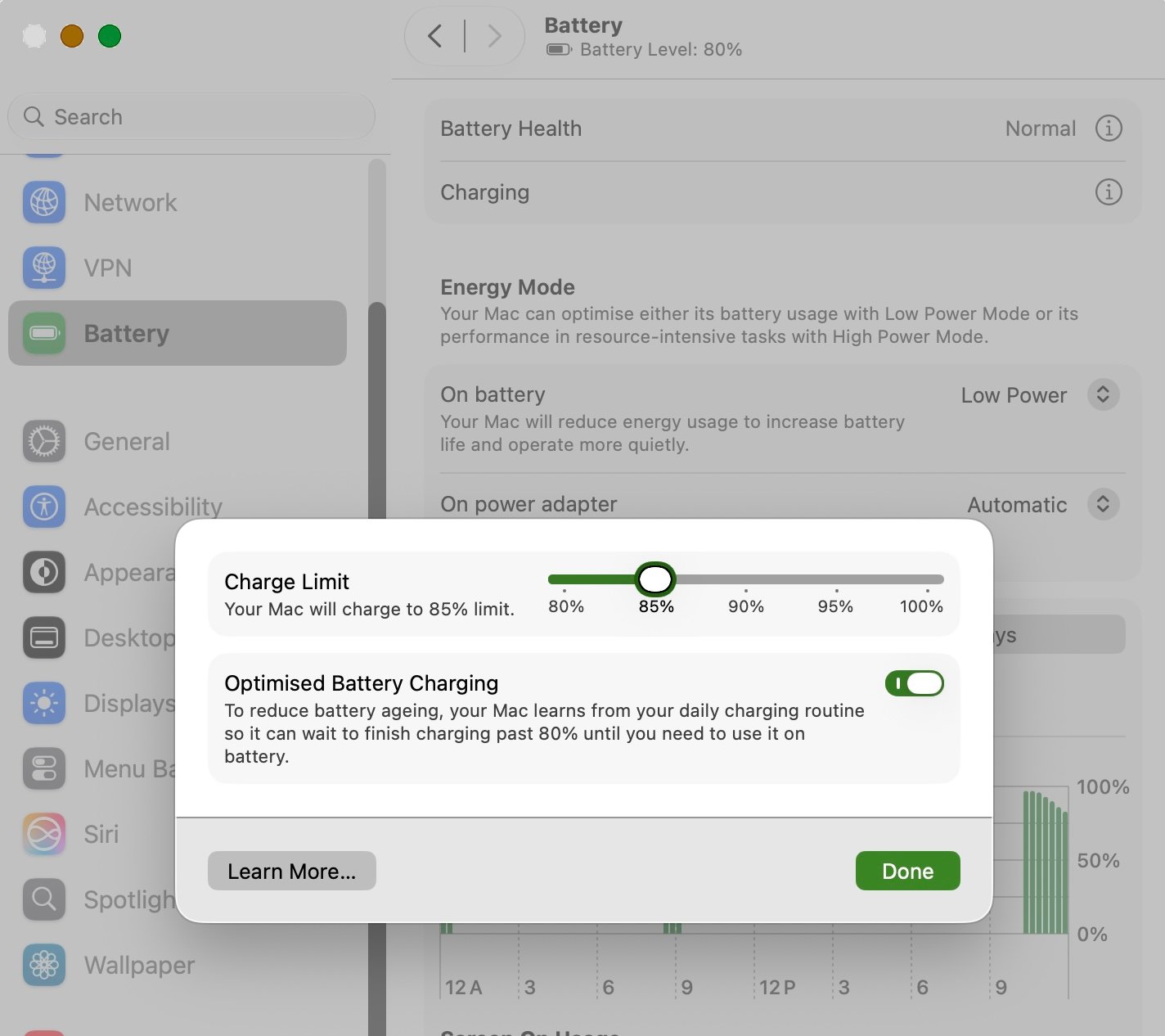
Visual Workflow: Toggle Optimized Battery Charging to ON in Battery Health.
Apple’s Default
Enabled by default on modern macOS installations.
TechZero Recommendation
Verify that it remains ON, especially if your laptop is docked to an external monitor 24/7.
💡 Expert Deep-Dive: Common Mistakes, Myths & Smart Tips
⚠️ Common Mistakes
- Assuming the Mac is broken when it holds at 80% charge; this is intentional behavior to preserve lithium-ion chemical lifespan.
✓ Battery & Power Checklist
- ✓ Enable Low Power Mode when traveling
- ✓ Enable Optimized Battery Charging
- ✓ Reduce default display brightness
- ✓ Set display auto-sleep intervals to 2–5 minutes
Secure Your Mac
Best for safeguarding personal documents, passwords, and banking records against physical device theft.
FileVault encrypts every single file on your startup disk using hardware-accelerated algorithms. Even if someone physically steals your MacBook, removes the internal SSD, and connects it to another computer, your personal documents, photos, and credentials remain unreadable. For low-level security compliance specs, see Apple Platform Security and our FileVault Guide.
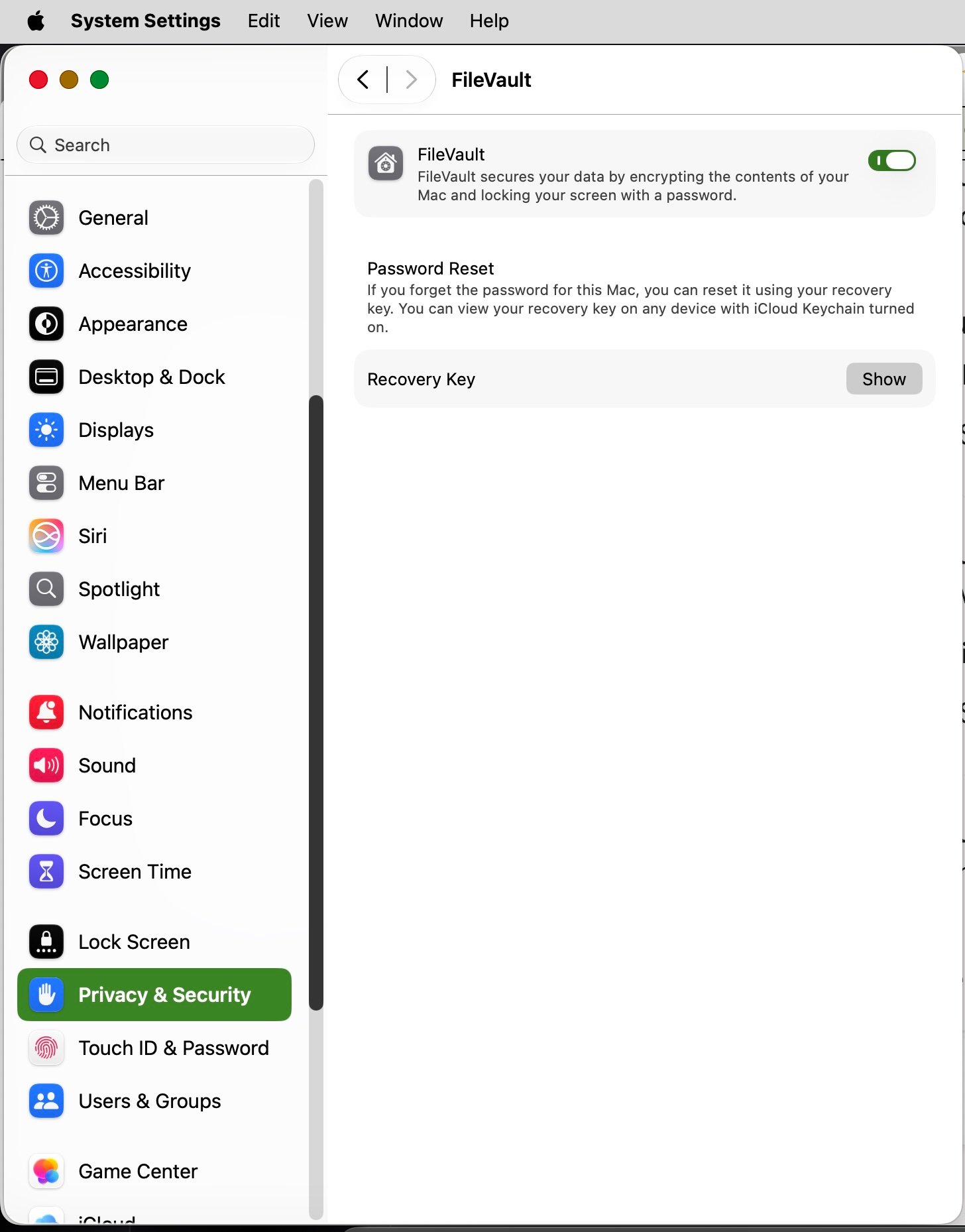
Visual Workflow: Click Turn On and store your recovery key securely.
Apple’s Default
Prompted during initial macOS setup assistant, but sometimes left disabled on custom corporate image builds.
TechZero Recommendation
Verify and keep enabled to ensure physical data security against unauthorized disk extraction.
💡 Expert Deep-Dive: Common Mistakes, Myths & Smart Tips
⚠️ Common Mistakes
- Failing to record or store the FileVault recovery key offline, risking permanent data lockout if iCloud account credentials are lost.
Best for travelers and coffee shop workers who frequently log onto public wireless networks.
The firewall acts as a digital bouncer at your Mac’s network doorway. It blocks unsolicited incoming connection attempts from malicious actors trying to probe your device on shared public networks.
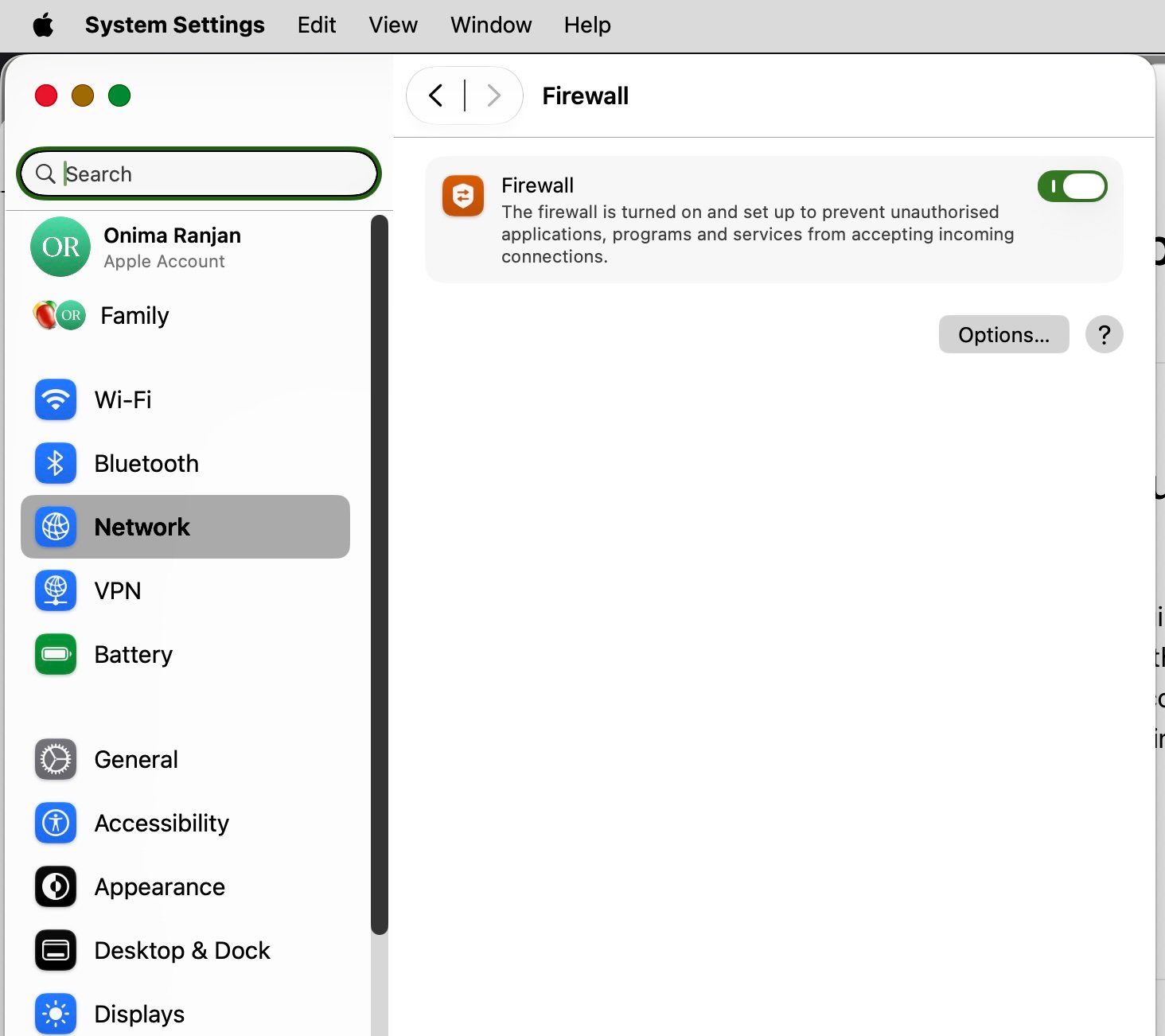
Visual Workflow: Toggle the master Firewall switch to ON and configure block options.
Apple’s Default
Disabled by default in standard macOS home installations.
TechZero Recommendation
Turn ON, especially if you frequently travel and connect to hotel or cafe Wi-Fi networks.
💡 Expert Deep-Dive: Common Mistakes, Myths & Smart Tips
⚠️ Common Mistakes
- Assuming the firewall blocks outbound traffic; macOS firewall is strictly designed for unsolicited inbound connection blocking.
✓ Security & Privacy Checklist
- ✓ Turn ON FileVault encryption
- ✓ Enable Find My Mac
- ✓ Turn ON the macOS Firewall for public networks
- ✓ Set Lock Screen password requirement to Immediately
Customize macOS
Best for reducing finger joint fatigue and improving everyday trackpad interaction speed.
Allows you to register a simple light tap with one finger on the trackpad surface as a mouse click, eliminating the need to physically depress the click mechanism. For advanced gesture navigation, check out our Trackpad Gestures Guide and Mission Control Guide.
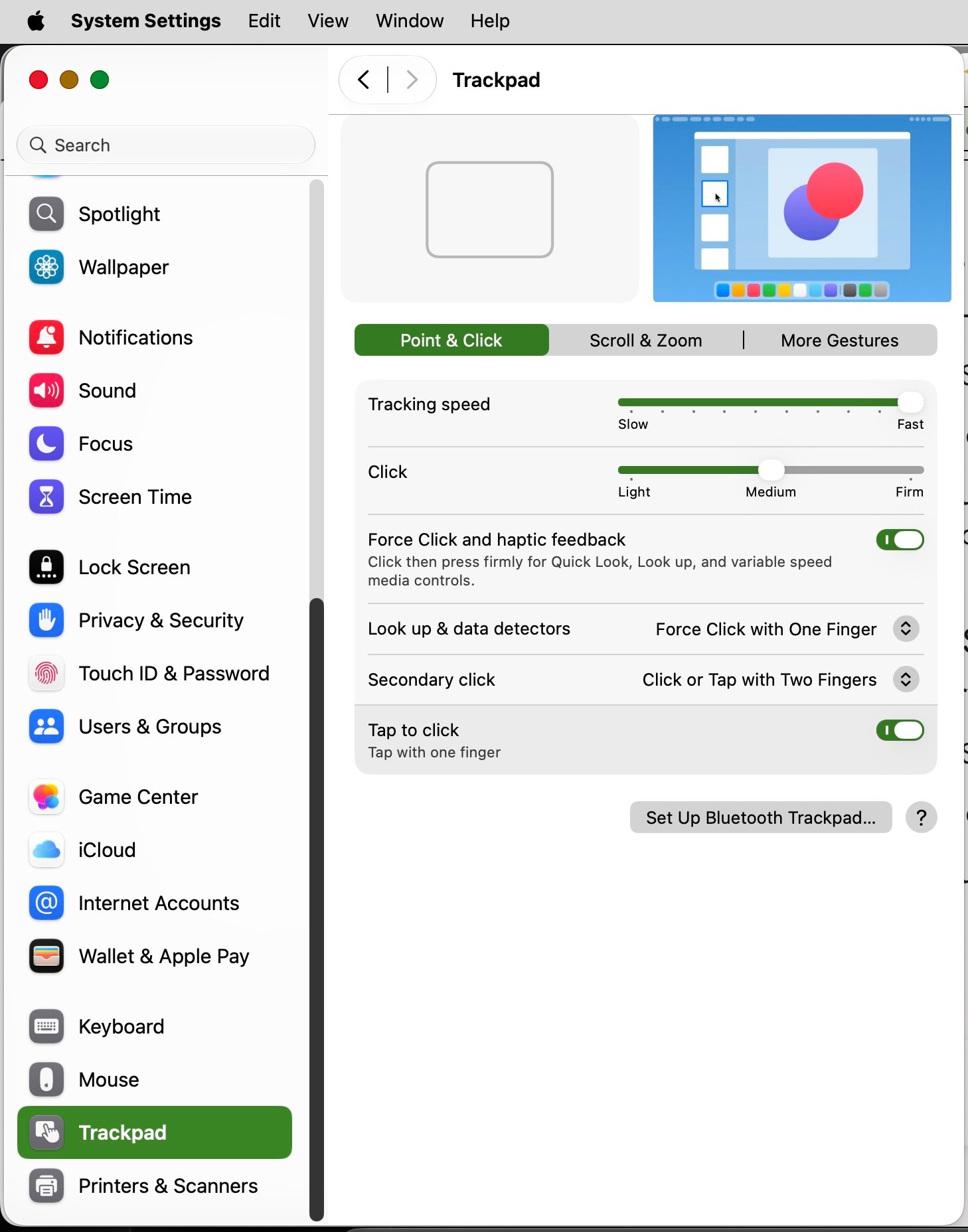
Visual Workflow: Check the box to activate single-finger tapping.
Apple’s Default
Disabled out of the box, requiring a physical mechanical click down on the haptic trackpad surface.
TechZero Recommendation
Enable to reduce physical finger fatigue during extended typing or writing sessions.
💡 Expert Deep-Dive: Common Mistakes, Myths & Smart Tips
⚠️ Common Mistakes
- Assuming tapping will trigger accidental clicks while typing without realizing modern macOS palm-rejection filters out resting wrists automatically.
✓ Customization & Ergonomics Checklist
- ✓ Enable Tap-to-Click in Trackpad settings
- ✓ Assign Hot Corners for rapid Quick Notes or Desktop views
- ✓ Enable auto-hide behavior for the Dock to maximize screen space
Advanced Settings
Best for accelerating domain name resolution and bypassing slow ISP router bottlenecks.
DNS servers act as the phone book of the internet, translating website names (like techzero.in) into machine-readable IP addresses. Faster DNS means web pages start loading faster. For complementary setup checks, see our Official Apple Support Documentation and our Keyboard Shortcuts Guide.
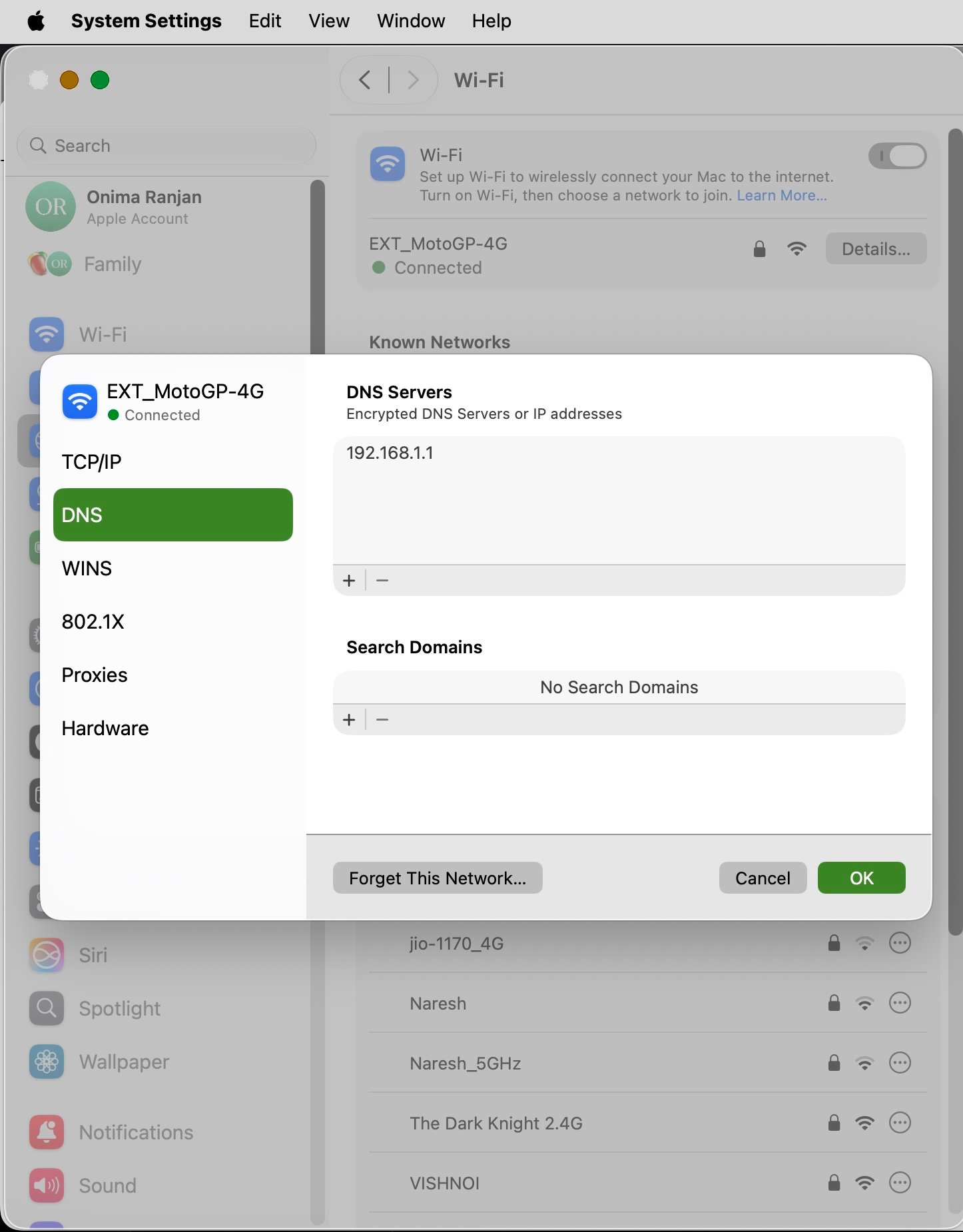
Visual Workflow: Add IPv4 addresses for Cloudflare (1.1.1.1) or Google (8.8.8.8).
*Typical improvement (depends on ISP routing and location).
Apple’s Default
Automatically inherits whichever default Domain Name System (DNS) servers your local Internet Service Provider (ISP) assigns.
TechZero Recommendation
Switch to public DNS resolvers like Cloudflare (1.1.1.1) or Quad9 (9.9.9.9) for faster lookups and reduced tracking.
💡 Expert Deep-Dive: Common Mistakes, Myths & Smart Tips
⚠️ Common Mistakes
- Confusing custom DNS settings with virtual private networks (VPNs) or believing that changing DNS servers alters your physical internet bandwidth caps.
✓ Advanced Power User Checklist
- ✓ Configure secure public DNS servers like Cloudflare 1.1.1.1
- ✓ Verify Network Priority order (Ethernet over Wi-Fi)
- ✓ Maintain default SIP and security states unless actively developing software
Frequently Asked Questions (FAQ)
Where are System Settings on Mac?
Click the Apple icon () in the top-left corner of your screen and select System Settings…, or open it directly from your Applications folder or Spotlight search.
Why did Apple replace System Preferences?
Apple replaced System Preferences with System Settings starting in macOS Ventura to establish a unified design language across iOS, iPadOS, and macOS, featuring a sidebar layout optimized for instant keyword searching.
How do I reset all macOS settings?
macOS does not have a single master “Reset All Settings” button like iOS. To clear configurations, you must target specific property list (.plist) files in user library folders or use the Transfer or Reset tool in General settings to factory wipe the machine.
Which macOS settings improve battery life?
Enabling Low Power Mode, turning down display brightness, enabling Optimized Battery Charging, and quitting heavy background processes in Login Items extend mobile runtime.
Which settings make a Mac faster?
Pruning startup items in General → Login Items, reducing visual transparency effects, maintaining free SSD storage, and limiting active background browser tabs optimize overall responsiveness.
What are the best privacy settings on Mac?
Enabling FileVault, turning on Private Wi-Fi Addresses, restricting application tracking permissions under Privacy & Security, and enforcing strict Location Services permissions.
How do I stop apps from opening at startup?
Go to System Settings → General → Login Items, and toggle off any unwanted applications listed under “Open at Login” or “Allow in the Background”.
What does FileVault do?
FileVault encrypts your startup drive data using encryption algorithms, ensuring that if your Mac is physically stolen, data cannot be read without your login password or recovery key.
Should I enable Firewall on Mac?
Yes, enabling the built-in macOS Application Firewall adds a layer of protection against unsolicited inbound network connections, especially when connecting to unsecured public Wi-Fi networks.
References & Links Hub
🌐 Part 1: Official External Sources


[…] Essential macOS Settings Guide […]
[…] Complete macOS Settings Guide — Discover the system-level macOS settings that affect your everyday productivity and mouse configuration. […]
[…] You can also explore practical macOS controls in our macOS Settings Guide. […]
[…] macOS Settings Guide – Optimize your system configurations for external resolutions and scaling. […]